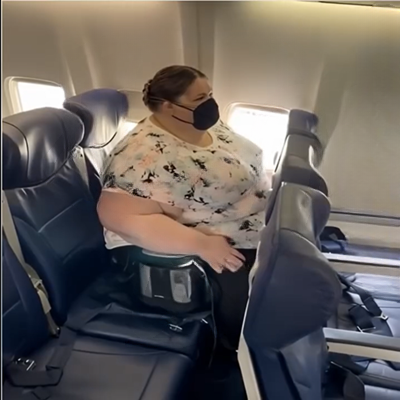
Air Travel Is Not the Same Experience for Everyone
For millions of people around the world, air travel has become a routine part of life. Whether flying for work, family visits, vacations, education, or emergencies, airplanes connect people across vast distances every day. Airports have become familiar spaces, and boarding a flight is often viewed as a simple process: check in, pass security, find your seat, and wait for takeoff.
Yet beneath this seemingly straightforward experience lies a reality that many travelers rarely think about.
Not every passenger experiences air travel in the same way.
For some individuals, flying can be stressful, uncomfortable, or physically challenging due to factors that are largely outside their control. These challenges can include mobility limitations, medical conditions, chronic pain, height, body shape, anxiety, sensory sensitivities, or other personal circumstances that make fitting into standard airline accommodations more difficult.
One topic that has received increasing attention in recent years is the decision by some travelers to purchase an additional seat when flying. While some people assume that buying an extra seat is a luxury or an unnecessary expense, the reality is often far more complex.
For many passengers, reserving additional space is not about extravagance. It is about comfort, safety, dignity, and the ability to travel without causing discomfort to themselves or others.
This is the story of why some travelers choose to purchase an extra seat, the challenges they face, and what their experiences reveal about modern air travel.
The Evolution of Airline Seating
To understand why this issue exists, it helps to look at how airline seating has changed over time.
Commercial aviation has evolved dramatically over the last several decades. Modern aircraft are safer, more efficient, and capable of carrying more passengers than ever before.
At the same time, airlines operate in a highly competitive environment.
To keep ticket prices affordable and maximize efficiency, many carriers have adjusted cabin layouts to accommodate more passengers within the same aircraft.
As a result, seat dimensions on many flights have gradually become more compact than they were in previous generations.
Passengers frequently comment on:
- Reduced legroom
- Narrower seating areas
- Limited personal space
- Smaller tray tables
- More densely packed cabins
While these adjustments may seem minor individually, they can significantly affect passenger comfort during long journeys.
A flight lasting one or two hours may be manageable for many travelers, but a journey lasting six, eight, or even twelve hours can become increasingly difficult when space is limited.
For some passengers, standard seating arrangements simply do not provide sufficient room for a comfortable experience.
A Personal Decision
For years, I approached air travel the same way many people do.
I purchased a single ticket, arrived at the airport, boarded the plane, and hoped for the best.
Each trip brought uncertainty.
Would the seat be large enough?
Would the armrests feel restrictive?
Would neighboring passengers become uncomfortable?
Would I spend the entire flight worrying about taking up too much space?
Those concerns often became more exhausting than the journey itself.
Travel should be about reaching a destination, seeing loved ones, attending important events, or exploring new places.
Instead, every flight seemed to involve anxiety about seating arrangements and how others might react.
Eventually, I began considering a solution that many people never realize exists: purchasing an additional seat.
At first, the idea felt unusual.
After all, airline tickets can be expensive.
Paying for a second seat appeared difficult to justify financially.
But after several uncomfortable travel experiences, I realized the issue was not about luxury.
It was about creating a practical solution for a recurring challenge.
The Financial Reality
One common misconception is that travelers who purchase an extra seat are doing so because they want additional luxury.
In reality, the decision often involves considerable financial sacrifice.
Airfare represents only one part of travel expenses.
Passengers may also need to pay for:
- Accommodation
- Transportation
- Meals
- Travel insurance
- Baggage fees
- Event or conference costs
- Family travel expenses
Adding a second airline seat can significantly increase the overall cost of a trip.
Many travelers who make this choice save money in other areas to accommodate the additional expense.
Some postpone trips until they can afford the extra cost.
Others spend weeks comparing fares and searching for airline policies that may offer more flexibility.
The decision is rarely made casually.
Instead, it is often the result of careful planning and budgeting.
The Importance of Personal Space
Personal space is something most people value, especially in environments where strangers spend extended periods together.
Airplanes place passengers in close proximity for hours at a time.
When seating is limited, even small discomforts can become magnified.
Having adequate space affects:
- Physical comfort
- Circulation
- Posture
- Stress levels
- Sleep quality during long flights
- Overall travel satisfaction
For travelers who require additional room, securing extra space can significantly improve the flying experience.
The benefit extends beyond the individual passenger.
Neighboring travelers also enjoy a more comfortable journey when everyone has sufficient room.
In this way, purchasing additional seating can create a better experience for multiple people, not just one.
The Emotional Side of Flying
Discussions about air travel often focus on logistics, pricing, or policies.
Less attention is given to the emotional experience.
Many travelers carry invisible concerns onto every flight.
Some worry about turbulence.
Others worry about missed connections.
Many fear delays or cancellations.
For travelers who already feel self-conscious about fitting comfortably into airline seating, additional stress can accompany every stage of the journey.
Questions may arise repeatedly:
- Will there be enough room?
- Will someone complain?
- Will I feel embarrassed?
- Will I spend the flight apologizing for circumstances beyond my control?
These concerns can create anxiety long before boarding begins.
The emotional burden is often overlooked by those who have never experienced it themselves.
Yet it can be one of the most difficult aspects of travel.
Why Empathy Matters
One of the most valuable lessons from modern travel is that every passenger arrives with a unique story.
The person seated next to you may be:
- Visiting a sick family member
- Traveling for work
- Attending a wedding
- Returning home after months away
- Managing a medical condition
- Facing personal challenges unknown to others
We rarely know the circumstances behind someone else’s choices.
A passenger purchasing an extra seat may be making a practical decision based on comfort, health, accessibility, or personal needs.
Rather than viewing such decisions through assumptions, empathy allows us to recognize that people have different requirements.
The goal of transportation is to help people reach their destinations safely and comfortably.
Respecting those differences benefits everyone.
Airline Policies Continue to Evolve
Many airlines have recognized the need for flexibility regarding passenger accommodations.
Policies vary significantly between carriers.
Some airlines provide:
- Additional seat options
- Accessibility support
- Special assistance services
- Flexible seating arrangements
- Refund programs under specific conditions
Others continue reviewing policies as passenger needs evolve.
Because airline procedures differ, travelers are often encouraged to contact carriers directly before booking.
Understanding available options can reduce uncertainty and help ensure a smoother travel experience.
As conversations around accessibility and inclusion continue to grow, many industry experts expect further improvements in passenger accommodations in the years ahead.
A Broader Conversation About Inclusion
The discussion surrounding airline seating is part of a larger societal conversation.
Modern communities increasingly recognize that people have different physical characteristics, abilities, and needs.
Designing systems that accommodate a wider range of individuals benefits everyone.
Examples can be found throughout society:
- Wheelchair-accessible entrances
- Family restrooms
- Priority seating
- Adjustable workspaces
- Inclusive public transportation features
These accommodations acknowledge an important reality:
A one-size-fits-all approach does not always serve everyone effectively.
Air travel is no exception.
As aircraft design, airline policies, and passenger expectations evolve, conversations about accessibility and comfort will likely remain important topics.
The Human Need for Dignity
At the heart of this discussion lies a simple concept: dignity.
Every traveler deserves to be treated with respect.
Every passenger deserves the opportunity to travel without unnecessary humiliation, embarrassment, or discomfort.
Dignity means being able to board an aircraft without fearing judgment.
It means focusing on the purpose of the journey rather than worrying about how others perceive you.
It means having access to practical solutions when standard accommodations do not fully meet individual needs.
For many travelers who purchase an additional seat, that reservation represents far more than extra space.
It represents peace of mind.
It represents confidence.
It represents the ability to travel with greater comfort and less anxiety.
Most importantly, it represents the belief that everyone deserves to move through the world with respect.
Changing Perspectives
Stories from travelers who reserve additional seating often challenge assumptions.
People who initially viewed the practice as unnecessary sometimes change their perspective after hearing personal experiences.
Understanding grows when we listen.
Many travel-related debates become less about rules and more about recognizing the realities faced by different individuals.
A little empathy can transform how we interpret another person’s decisions.
Instead of asking, “Why would someone pay for an extra seat?” we might ask:
“What circumstances led them to make that choice?”
That shift in perspective often leads to greater understanding.
Looking Toward the Future
Air travel continues to evolve.
Aircraft technology improves.
Customer expectations change.
Accessibility conversations expand.
As airlines seek ways to better serve diverse passenger populations, innovative solutions may emerge.
Future possibilities could include:
- More flexible seating configurations
- Enhanced comfort options
- Improved accessibility services
- Better accommodation policies
- Greater awareness of diverse traveler needs
The aviation industry has continually adapted throughout its history, and passenger comfort remains an important part of that evolution.
Final Thoughts
Purchasing an additional airplane seat is often misunderstood.
For some travelers, it may appear to be a luxury.
For others, however, it is a thoughtful and practical decision made to improve comfort, reduce stress, and create a better travel experience for everyone involved.
Air travel brings together people from every background, age group, profession, and life circumstance.
Because every passenger’s needs are different, solutions that work for one individual may not work for another.
The most important takeaway is not whether someone purchases one seat or two.
It is recognizing that respectful travel begins with understanding.
Behind every boarding pass is a person with unique experiences, challenges, and reasons for the choices they make.
When we approach those differences with empathy rather than judgment, travel becomes more welcoming, more inclusive, and ultimately more human.
In a world where people are constantly moving between cities, countries, and continents, dignity remains one of the most valuable things any traveler can carry with them.
And sometimes, a reserved seat is not about having more than others—it is simply about having the space needed to travel with comfort, confidence, and respect.