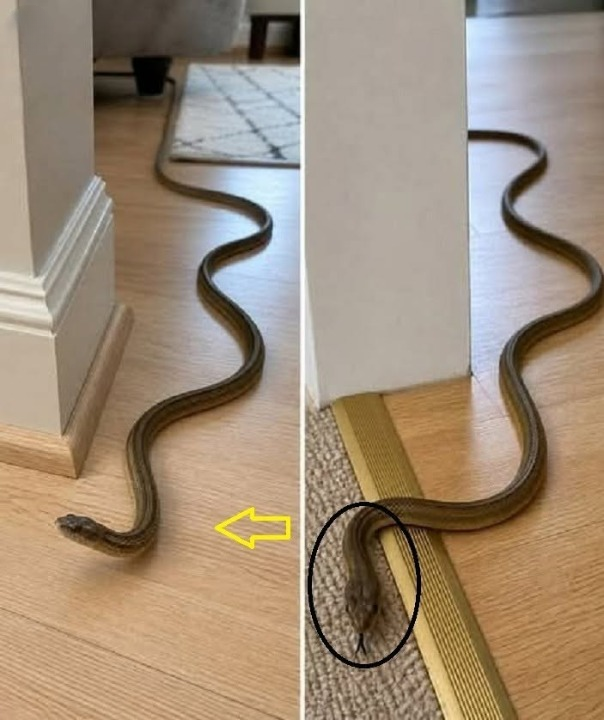
Few household surprises can cause as much excitement—or concern—as discovering a snake inside your home.
Whether you find one in your garage, basement, backyard, or even inside a room, your first reaction is probably the same as most people’s:
“How did it get in here?”
For centuries, people around the world have attached special meanings, beliefs, and superstitions to snakes appearing near homes. Some cultures view them as symbols of luck, while others see them as warnings or signs of change.
However, modern wildlife experts offer a much simpler explanation.
In most cases, when a snake enters a house, it is not a sign of good luck, bad luck, or anything mysterious.
Instead, it is usually looking for one of three things:
- Shelter
- Food
- A comfortable environment
Understanding why snakes sometimes appear near homes can help homeowners respond calmly and safely.
Why Snakes Enter Homes
Contrary to popular belief, snakes do not actively seek out people.
In fact, most snakes prefer avoiding human contact whenever possible.
If a snake enters a house, it generally happens because the environment provides something it needs to survive.
Wildlife specialists explain that snakes often move into residential areas because they are searching for resources.
Just like birds, squirrels, and other animals, snakes are simply trying to find safe places to live.
Looking for Shelter
One of the most common reasons snakes enter buildings is shelter.
Homes provide protection from weather conditions such as:
- Heavy rain
- Extreme heat
- Strong winds
- Cold temperatures
Small openings around foundations, doors, vents, or utility lines can sometimes provide access points.
Once inside, snakes often remain hidden in quiet areas.
Common hiding spots include:
- Basements
- Crawl spaces
- Storage rooms
- Garages
- Attics
These locations offer darkness, protection, and minimal disturbance.
Searching for Food
Another major reason snakes appear near homes is food availability.
Snakes primarily feed on small animals and pests.
Depending on the species, their diet may include:
- Mice
- Rats
- Small insects
- Frogs
- Lizards
If rodents are present around a property, snakes may naturally follow.
In fact, a snake’s presence can sometimes indicate that another pest problem already exists.
This is one reason wildlife professionals often recommend checking for signs of rodent activity when snakes are discovered nearby.
Temperature Matters
Snakes are cold-blooded animals.
This means they rely on external temperatures to regulate their body heat.
As a result, they are constantly searching for environments that help them remain comfortable.
During hot summer months, they may seek cooler areas.
During colder periods, they may look for warmer spaces.
Homes often provide both.
A shaded basement on a hot day can be very attractive to a snake.
Likewise, a warm garage during cooler weather can offer temporary refuge.
Common Entry Points
Many homeowners wonder how snakes manage to enter buildings.
The answer is often surprising.
Snakes can fit through very small openings.
Potential entry points include:
- Cracks in foundations
- Gaps under doors
- Unsealed utility openings
- Damaged vents
- Broken screens
Because some species are remarkably flexible, openings that appear insignificant may still provide access.
Regular home maintenance can help reduce these opportunities.
Are All Snakes Dangerous?
One of the biggest misconceptions about snakes is that all of them are dangerous.
In reality, the vast majority of snake species are harmless to humans.
Many play valuable roles in local ecosystems.
They help control populations of rodents and other pests.
Wildlife experts generally encourage people not to panic if they encounter a snake.
Instead, the safest approach is to maintain distance and allow trained professionals to identify or remove the animal if necessary.
What Should You Do If You Find a Snake Indoors?
Discovering a snake inside your home can be startling, but staying calm is important.
Experts recommend several basic steps:
Stay Calm
Most snakes are far more interested in escaping than interacting with people.
Sudden movements may increase stress for both you and the animal.
Keep Your Distance
Avoid attempting to handle or capture the snake yourself.
Even harmless species can bite if they feel threatened.
Secure Pets and Children
Move pets and young children away from the area until the situation is resolved.
Contact Local Wildlife Professionals
Animal control agencies, wildlife specialists, or local authorities can often assist with identification and safe removal.
Preventing Future Visits
Fortunately, several simple measures can reduce the likelihood of snakes entering a property.
Seal Openings
Inspect foundations, doors, windows, and utility entry points for gaps.
Repairing small openings can significantly improve protection.
Reduce Clutter
Outdoor piles of wood, debris, and dense vegetation create excellent hiding places for snakes.
Keeping yards tidy makes properties less attractive.
Control Rodents
Reducing food sources is one of the most effective prevention methods.
If rodents are present, addressing the issue may discourage snakes from remaining nearby.
Maintain Landscaping
Trim tall grass and shrubs around the home.
Shorter vegetation reduces hiding opportunities.
Why Snakes Are Important
Although many people fear snakes, they serve important ecological functions.
They help maintain balance within natural environments.
By controlling pest populations, they contribute to healthier ecosystems.
Without predators such as snakes, rodent populations could increase significantly.
This can lead to additional challenges for agriculture, homes, and public health.
Understanding their role can help people appreciate these animals even if they prefer not to encounter them indoors.
Common Myths About Snakes
Many myths continue circulating about snakes.
Let’s examine a few.
Myth: A Snake Entering Your Home Means Good Luck
There is no scientific evidence supporting this belief.
Snakes enter buildings for practical reasons related to survival.
Myth: Snakes Always Travel in Pairs
Wildlife experts note that finding one snake does not necessarily indicate another is nearby.
Each situation depends on local environmental conditions.
Myth: Snakes Chase People
Most snakes avoid humans whenever possible.
When they appear to move toward a person, they are often simply trying to reach safety.
Myth: Every Snake Is Venomous
Only a small percentage of snake species possess medically significant venom.
Many are completely harmless.
Understanding Rather Than Fearing
Fear often comes from uncertainty.
The more we understand wildlife, the easier it becomes to respond appropriately.
Snakes are not plotting to invade homes.
They are simply animals responding to environmental conditions.
By understanding why they appear, homeowners can take practical steps to reduce encounters while remaining respectful of local wildlife.
Final Thoughts
If a snake enters your house, it does not necessarily mean anything mysterious or symbolic.
Most often, it is simply seeking shelter, food, warmth, or protection from the elements.
While finding a snake indoors can certainly be surprising, understanding the reasons behind the encounter can help replace fear with knowledge.
With proper prevention, regular home maintenance, and calm decision-making, most snake encounters can be handled safely and effectively.
The next time you hear someone say that a snake entering a house is a sign of something extraordinary, remember that nature usually has a much simpler explanation.
Sometimes a snake is simply being a snake—looking for a safe place to rest and survive.