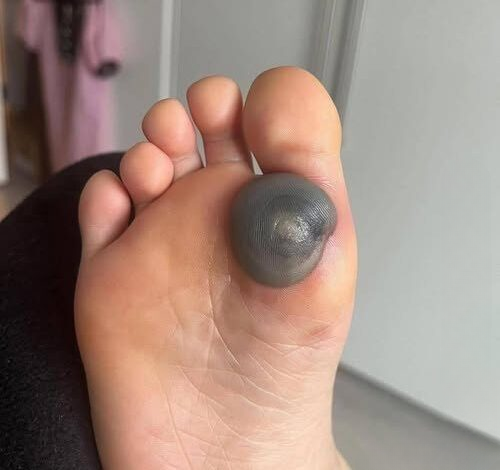
Few things can worry a parent more than noticing an unexpected mark or swelling on their child’s body. One moment your child may be playing, running, or enjoying their day, and the next they are complaining of discomfort while pointing to a dark spot on their foot. The area may appear red, purple, or deep maroon, causing understandable concern and prompting questions about what could be happening beneath the skin.
While a sudden dark spot can look alarming, it is important to remember that many foot-related skin changes in children are caused by relatively common and manageable conditions. In many cases, the mark may be a blood blister, which often develops after pressure, friction, or minor trauma to the foot. Understanding what a blood blister is, why it forms, and how to care for it can help parents respond calmly and appropriately.
This guide explores the causes, symptoms, treatment options, prevention strategies, and warning signs associated with blood blisters and other foot-related skin concerns in children.
Why a Dark Spot on the Foot Can Look So Concerning
The skin on the feet experiences a significant amount of pressure every day. Whether children are running on playgrounds, participating in sports, wearing new shoes, or simply being active, their feet absorb constant impact.
When a dark-colored blister appears suddenly, it can look much more serious than it actually is. The discoloration may range from:
- Dark red
- Purple
- Maroon
- Brownish-red
- Nearly black in appearance
Because of its unusual color, parents may initially mistake it for a severe bruise or another medical issue. However, the dark coloration is often caused by blood trapped beneath an intact layer of skin.
Although the appearance can be dramatic, many blood blisters heal successfully with proper care and observation.
What Is a Blood Blister?
A blood blister is a small pocket of fluid that forms beneath the outer layer of the skin. Unlike a standard blister that contains clear fluid, a blood blister contains blood that has collected after tiny blood vessels beneath the skin become damaged.
The skin itself remains largely unbroken, creating a protective covering over the affected area.
Blood blisters commonly develop after:
- Friction from shoes
- Repeated rubbing
- Pinching injuries
- Pressure from sports equipment
- Minor impacts
- Accidental bumps
Because the blood remains trapped beneath the skin, the blister often appears darker than a typical blister.
How Blood Blisters Develop
To understand why blood blisters form, it helps to know what happens beneath the skin.
The skin contains numerous tiny blood vessels called capillaries. These vessels help deliver oxygen and nutrients throughout the body.
When enough pressure or friction is applied to an area:
- The capillaries may become damaged.
- Small amounts of blood leak into the surrounding tissue.
- The outer layer of skin remains intact.
- Blood collects beneath the skin.
- A raised blister-like area develops.
The body then begins its natural healing process, gradually reabsorbing the trapped blood over time.
Common Causes of Blood Blisters in Children
Children are naturally active, making them especially prone to developing blood blisters.
1. Poorly Fitting Shoes
One of the most common causes is footwear that does not fit properly.
Shoes that are:
- Too tight
- Too loose
- Stiff around the heel
- Narrow around the toes
can repeatedly rub against the skin, creating enough friction to cause blister formation.
Children may not always notice early irritation, allowing the problem to worsen throughout the day.
2. Sports and Physical Activity
Active children frequently participate in:
- Soccer
- Basketball
- Running
- Hiking
- Playground activities
- Dance
Repeated impact and movement increase friction on the feet, making blood blisters more likely.
Long practice sessions or tournaments can further increase the risk.
3. Sudden Pressure Injuries
A blood blister can also develop after:
- Dropping an object on the foot
- Stepping awkwardly
- Getting a foot pinched
- Striking furniture or hard surfaces
Even seemingly minor injuries may cause small blood vessels beneath the skin to rupture.
4. Repetitive Motion
Certain activities create repeated pressure in the same location.
Examples include:
- Long walks
- Running on hard surfaces
- Wearing new shoes
- Participating in multi-day sports events
Over time, repeated friction can damage underlying tissue and lead to blister formation.
What Does a Blood Blister Look Like?
Blood blisters can vary in appearance depending on:
- Their size
- Their location
- The amount of trapped blood
- The stage of healing
Common characteristics include:
- Raised surface
- Smooth appearance
- Dark red coloration
- Purple tint
- Tenderness
- Mild swelling
The area may feel sensitive when touched or when pressure is applied during walking.
As healing progresses, the color often changes gradually before fading.
Signs and Symptoms Parents May Notice
Children may report several symptoms when a blood blister develops.
These can include:
Pain or Tenderness
The area may feel sore, especially during movement.
Difficulty Walking
Children sometimes alter their walking pattern to avoid pressure on the blister.
Swelling
A small amount of swelling around the affected area is common.
Sensitivity to Touch
Even light contact may cause discomfort.
Visible Discoloration
The blister often stands out because of its darker color compared with surrounding skin.
How Blood Blisters Differ from Regular Blisters
Regular blisters typically contain clear fluid.
Blood blisters contain blood instead of clear fluid because tiny blood vessels have been affected.
Regular Blister
- Clear appearance
- Pale yellow fluid
- Usually caused by friction
Blood Blister
- Dark red or purple appearance
- Contains blood
- Often caused by friction combined with pressure or trauma
Despite their different appearance, both types generally heal in similar ways.
Should You Pop a Blood Blister?
One of the most common questions parents ask is whether they should drain or pop a blood blister.
In most situations, healthcare professionals recommend leaving the blister intact whenever possible.
The skin covering the blister acts as a natural protective barrier that helps:
- Reduce irritation
- Protect against bacteria
- Support healing
- Lower the risk of complications
Opening the blister unnecessarily may increase the likelihood of infection and delay recovery.
Safe Home Care for a Blood Blister
Most uncomplicated blood blisters can be managed at home with simple care measures.
Rest the Foot
Reducing pressure on the affected area allows healing to occur more efficiently.
Encourage your child to avoid activities that aggravate discomfort.
Keep the Area Clean
Gently wash the area with mild soap and water.
Avoid harsh scrubbing or irritating products.
Protect the Blister
A soft bandage or protective dressing may help reduce friction from socks and shoes.
Make sure the covering is clean and changed regularly.
Choose Comfortable Footwear
Well-fitting shoes can prevent further irritation.
Look for footwear that:
- Provides cushioning
- Fits correctly
- Allows proper airflow
- Does not rub against the blister
Monitor Healing
Most blood blisters gradually improve over days or weeks.
Watch for changes in size, color, or comfort level.
The Natural Healing Process
Blood blisters often heal without significant intervention.
During recovery:
Stage 1: Formation
The blister appears dark and swollen.
Stage 2: Stabilization
Pain often begins to decrease.
Stage 3: Reabsorption
The body gradually breaks down and absorbs the trapped blood.
Stage 4: Resolution
The skin returns closer to its normal appearance.
Healing time varies depending on the size of the blister and the amount of ongoing pressure placed on the area.
Preventing Future Blood Blisters
Prevention can significantly reduce the likelihood of recurring problems.
Ensure Proper Shoe Fit
Children’s feet grow quickly.
Regularly check shoe size and replace footwear when necessary.
Wear Appropriate Socks
Quality socks help reduce friction and moisture buildup.
Look for:
- Soft materials
- Proper cushioning
- Moisture-wicking fabrics
Break In New Shoes Gradually
New footwear should be worn for short periods before extended activity.
This allows the feet to adjust and reduces rubbing.
Inspect Feet Regularly
Parents can identify early signs of irritation before a blister forms.
Check for:
- Redness
- Pressure marks
- Areas of rubbing
- Skin irritation
Other Conditions That May Resemble a Blood Blister
Not every dark spot on the foot is a blood blister.
Several other conditions may appear similar.
Examples include:
- Bruises
- Friction blisters
- Skin irritation
- Minor skin injuries
- Certain dermatological conditions
Because appearances can overlap, professional evaluation may be helpful when the diagnosis is uncertain.
When to Consider Medical Evaluation
Although many blood blisters heal without difficulty, there are situations where medical advice may be appropriate.
Consider contacting a healthcare professional if:
- Pain becomes severe
- Walking remains difficult
- Symptoms continue worsening
- The area becomes increasingly swollen
- The discoloration spreads
- Healing does not seem to be occurring
A healthcare provider can assess the area and determine whether additional treatment is necessary.
Signs That Need Prompt Medical Attention
Parents should seek professional medical care if a child develops symptoms such as:
- Increasing redness around the area
- Significant swelling
- Warmth around the skin
- Pus or unusual drainage
- Fever
- Rapid worsening of symptoms
- Persistent inability to walk
These signs may indicate that further evaluation is needed.
Helping Children Stay Comfortable During Recovery
Children often find foot injuries frustrating because they interfere with normal play and activities.
Parents can support recovery by:
- Encouraging rest
- Providing comfortable footwear
- Using protective dressings when appropriate
- Keeping the area clean
- Monitoring healing progress
Reassurance can also help reduce anxiety about the appearance of the blister.
Understanding the Importance of Foot Health
Healthy feet play a major role in a child’s overall mobility and comfort. Small problems can quickly become noticeable because children spend so much time running, jumping, and exploring their environment.
Teaching children healthy foot habits early can reduce future issues.
Helpful habits include:
- Wearing properly fitted shoes
- Changing socks regularly
- Keeping feet clean and dry
- Reporting discomfort early
- Avoiding shoes that cause rubbing
These simple practices support healthy development and comfort.
Final Thoughts
Discovering a dark spot or blister on your child’s foot can be surprising and concerning, especially when it appears suddenly or causes discomfort. Fortunately, many cases are related to blood blisters, which commonly develop after friction, pressure, or minor injuries and often heal successfully with basic care.
Understanding how blood blisters form, recognizing their symptoms, and knowing when to seek professional medical advice can help parents respond confidently and appropriately. While the appearance of a blood blister may seem dramatic, its presence does not automatically indicate a serious condition.
Careful observation, good hygiene, protective footwear, and attention to your child’s symptoms are usually the most important steps. If the blister changes unexpectedly, causes significant discomfort, or fails to improve, a healthcare professional can provide guidance and ensure the best possible outcome.
By staying informed and attentive, parents can help keep their children comfortable, active, and healthy while supporting the body’s natural healing process.