A Small Tool With a Surprisingly Big Story
In a world dominated by advanced technology, smart devices, and modern conveniences, it is easy to overlook simple tools that have quietly served generations of people. Many everyday objects come and go, replaced by newer designs or more sophisticated alternatives. Yet every so often, a small invention proves so effective that it remains useful decades after its creation.
One such example is the P-38 can opener.
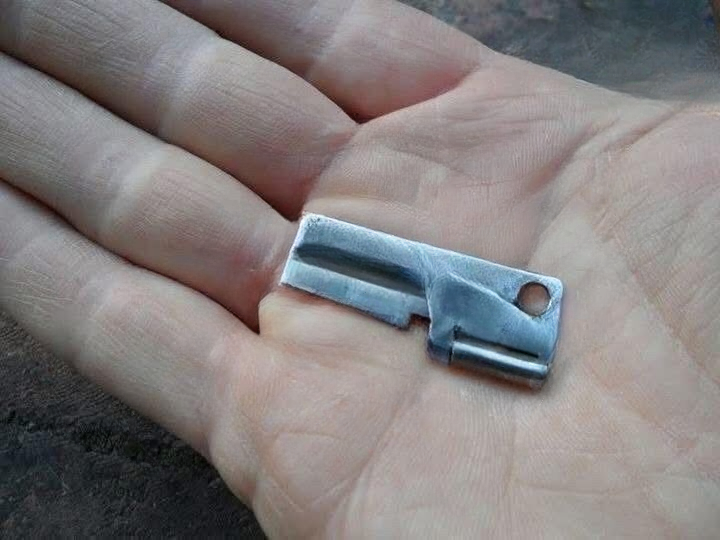
At first glance, the tool appears almost insignificant. It is small enough to fit in a pocket, light enough to be attached to a keychain, and simple enough that many younger generations may not immediately recognize its purpose.
Despite its modest appearance, this compact device has earned a reputation as one of the most practical and enduring tools ever produced.
Its story spans military history, outdoor adventure, emergency preparedness, and everyday convenience. More than eighty years after its introduction, it continues to be appreciated by collectors, campers, survival enthusiasts, and anyone who values efficient design.
What Exactly Is the P-38 Can Opener?
The P-38 is a compact manual can opener made entirely from metal.
The tool features a small cutting blade attached to a foldable handle. When unfolded, it allows users to puncture and cut through metal can lids using a series of controlled movements around the edge.
Unlike modern kitchen can openers that rely on rotating gears and larger handles, the P-38 operates with remarkable simplicity.
There are no moving parts beyond the folding blade.
There are no batteries.
There are no electronic components.
Just a carefully designed piece of metal engineered to perform a single task exceptionally well.
This straightforward approach is one of the reasons the tool has remained relevant for so long.
The Origins of the P-38
The P-38’s history is closely connected to a period of global change and innovation.
During the 1940s, military personnel often relied on canned food as a practical and reliable source of nutrition. However, opening those cans in the field presented a challenge.
Large kitchen can openers were impractical to carry during military operations.
A more portable solution was needed.
Engineers developed a compact tool that could easily fit into a pocket while still providing reliable performance under demanding conditions.
The result was the P-38.
Its small size made it easy to distribute, transport, and use wherever necessary.
What began as a practical solution for military logistics would eventually become one of the most recognizable pocket tools ever created.
Why Is It Called the P-38?
One of the most frequently asked questions concerns the tool’s unusual name.
Several explanations have circulated over the years.
A popular theory suggests that the average user could open a standard ration can in approximately thirty-eight motions, leading to the designation “P-38.”
Others believe the name was simply part of a military classification system.
Regardless of the exact origin, the name became widely recognized and remains associated with the tool today.
Over time, the term “P-38” became synonymous with compact manual can openers in general.
A Masterclass in Efficient Design
What makes the P-38 remarkable is not its complexity but its efficiency.
Many modern products attempt to solve problems through added features and advanced technology.
The P-38 demonstrates the opposite philosophy.
Its design focuses entirely on functionality.
Every aspect of the tool serves a purpose:
- Compact size
- Lightweight construction
- Durable materials
- Simple operation
- Minimal maintenance requirements
Because it contains so few components, there is very little that can malfunction.
This reliability contributed significantly to its popularity.
People trusted the tool because it consistently performed its intended function.
Why It Became Popular Beyond Military Use
After gaining widespread recognition, the P-38 gradually found new audiences.
Outdoor enthusiasts discovered that it was ideal for camping trips.
Hikers appreciated its lightweight design.
Emergency preparedness advocates included it in survival kits.
Travelers carried it as a backup tool.
Its versatility allowed it to transition from military equipment to civilian utility.
People quickly realized that a tool designed for challenging environments could also be valuable in everyday situations.
As a result, the P-38 became a common addition to toolboxes, backpacks, glove compartments, and keychains.
The Perfect Companion for Outdoor Adventures
Camping enthusiasts often emphasize the importance of carrying equipment that is reliable, compact, and multifunctional.
The P-38 fits those requirements perfectly.
Unlike larger kitchen tools, it occupies almost no space.
Its metal construction allows it to withstand rough handling and varying weather conditions.
Many outdoor adventurers appreciate having a tool that works independently of electricity or mechanical complexity.
In remote environments, simplicity often becomes a significant advantage.
The fewer components a tool contains, the fewer potential points of failure exist.
This philosophy has helped maintain the P-38’s popularity among campers and hikers for decades.
Emergency Preparedness and Practical Reliability
Preparedness experts frequently recommend keeping basic tools available for unexpected situations.
During power outages, severe weather events, or other disruptions, access to stored food can become important.
A manual can opener remains one of the most useful items in many emergency kits.
The P-38’s durability and compact size make it particularly attractive for this purpose.
Because it requires no external power source, it remains functional regardless of circumstances.
This reliability has helped it earn a place in countless preparedness plans around the world.
The Appeal of Minimalism
In recent years, minimalist design has become increasingly popular.
Consumers often seek products that prioritize function over unnecessary complexity.
The P-38 embodies this philosophy.
Its creators focused on solving a specific problem with maximum efficiency.
The result is a tool that has remained largely unchanged for generations.
Many modern designers view it as an example of successful engineering.
The fact that a decades-old design continues to compete with newer alternatives speaks volumes about its effectiveness.
A Collector’s Favorite
Beyond practical use, the P-38 has also become a popular collectible.
Military history enthusiasts frequently seek original examples from different periods.
Collectors appreciate the tool’s historical significance and connection to important moments in history.
Some examples feature unique markings or manufacturing variations that increase their appeal.
For many collectors, owning a P-38 represents more than acquiring a tool.
It represents preserving a small piece of history.
Lessons From a Lasting Design
The enduring popularity of the P-38 offers valuable lessons about innovation.
Not every successful invention needs to be complicated.
Sometimes the most effective solutions are the simplest.
The tool demonstrates several important design principles:
- Focus on essential functionality
- Eliminate unnecessary complexity
- Prioritize reliability
- Design for durability
- Create products that solve real problems
These concepts remain relevant across countless industries today.
Why It Continues to Fascinate New Generations
Even people who have never used a P-38 often find its story intriguing.
The contrast between its tiny size and its enduring reputation captures attention immediately.
Younger generations accustomed to digital technology may be surprised that such a simple device remains useful.
Yet that simplicity is precisely what makes it remarkable.
The tool serves as a reminder that innovation does not always require advanced electronics or complex systems.
Sometimes thoughtful engineering is enough.
The Broader Cultural Significance
The P-38 has gradually become more than just a can opener.
For many people, it symbolizes self-reliance, preparedness, and practical problem-solving.
Its continued presence in outdoor communities and emergency preparedness circles reflects values that remain important today.
Resourcefulness.
Adaptability.
Efficiency.
Reliability.
These qualities help explain why the tool continues to attract attention decades after its introduction.
Why Some Designs Never Become Obsolete
Most products eventually disappear as technology evolves.
However, certain designs achieve a rare level of effectiveness that allows them to remain relevant indefinitely.
The P-38 belongs to that category.
Its purpose remains unchanged.
Its operation remains effective.
Its advantages remain meaningful.
As long as canned food exists, there will likely be situations where a simple, dependable manual opener proves useful.
That reality helps explain why the tool has survived while countless alternatives have faded into obscurity.
Final Thoughts
The P-38 can opener may be small, but its impact has been surprisingly significant.
Originally developed as a practical solution for opening ration cans, it evolved into a trusted companion for campers, travelers, preparedness enthusiasts, collectors, and everyday users.
Its continued popularity demonstrates the power of thoughtful design and reliable functionality.
In a world where products often become outdated within a few years, the P-38 stands as an impressive exception.
More than eight decades after its introduction, this tiny piece of metal continues to perform its job with remarkable effectiveness.
Sometimes the most enduring innovations are not the largest or most technologically advanced.
Sometimes they fit comfortably in the palm of your hand—and quietly stand the test of time.