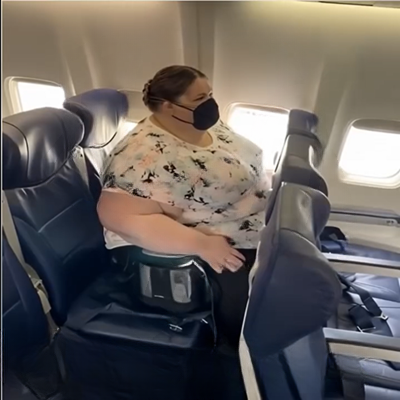
My Reserved Space: Why Booking an Additional Airplane Seat Is About Comfort, Respect, and Accessibility
Air travel has transformed the way people experience the world. Whether traveling for business, visiting family, pursuing educational opportunities, or simply exploring new destinations, flying has become a routine part of modern life. Airports welcome millions of passengers every day, each carrying their own stories, goals, and reasons for travel.
Yet while air travel is often presented as a standardized experience, the reality is that every passenger experiences it differently. Factors such as age, height, mobility, medical needs, disabilities, and body size can significantly affect comfort and accessibility during a flight.
For some travelers, boarding an airplane is little more than a minor inconvenience before reaching their destination. For others, it requires careful planning, emotional preparation, and thoughtful decision-making. One choice that has sparked ongoing discussion is the decision by some passengers to purchase an additional seat.
Many people assume that buying a second seat is a luxury or an unnecessary expense. However, for numerous travelers, the decision has little to do with luxury and everything to do with comfort, safety, dignity, and consideration for everyone sharing the cabin.
This is the story of why an extra seat can represent much more than additional space—and why understanding different travel needs can help create a more respectful experience for everyone.
The Reality of Modern Airplane Seating
Commercial aviation has evolved dramatically over the past several decades. Airlines have made incredible advancements in technology, fuel efficiency, safety systems, and passenger amenities.
At the same time, aircraft seating has become increasingly compact.
Many travelers have noticed that seat widths and legroom often feel tighter than they remember from years ago. Airlines must balance operational efficiency, affordability, and passenger demand while maximizing available cabin space.
As a result, modern seating arrangements are designed to accommodate as many travelers as possible.
While these configurations may work reasonably well for many passengers, they do not necessarily meet the needs of every traveler.
A person who is exceptionally tall may struggle with legroom.
Someone recovering from surgery may require additional space.
A traveler using medical equipment may need special accommodations.
Similarly, passengers with larger body types may find standard seating dimensions difficult to navigate comfortably.
These realities are not criticisms of airlines or fellow passengers. Rather, they highlight the fact that human bodies come in a wide range of shapes and sizes, while airplane seats remain relatively uniform.
Understanding the Decision to Purchase an Extra Seat
For some travelers, purchasing an additional seat is not an indulgence.
It is a practical solution.
The choice often comes after years of uncomfortable flights, concerns about personal space, and efforts to ensure a better experience for everyone involved.
Booking an extra seat can provide:
- Greater personal comfort
- Improved mobility during long flights
- Reduced physical strain
- Additional room for medical needs
- Better accommodation of personal circumstances
- Increased comfort for neighboring passengers
Many travelers who purchase extra seating do so after carefully considering the financial implications.
Airfare can already be expensive.
Adding a second seat often doubles a significant portion of travel costs.
This is not a decision most people make casually.
Instead, it is often viewed as an investment in a more manageable and respectful travel experience.
The Emotional Side of Flying
Physical comfort is only one part of the conversation.
The emotional experience of air travel can be equally important.
Many passengers worry about making others uncomfortable.
They may feel self-conscious while boarding.
They may wonder whether neighboring passengers are judging them.
They may become anxious about fitting comfortably within the assigned seating area.
Even when fellow travelers are polite, these concerns can create stress long before the aircraft leaves the ground.
Travel should ideally be exciting.
It should be about visiting loved ones, attending important events, or exploring new places.
Yet anxiety about seating arrangements can overshadow these positive experiences.
For some individuals, purchasing an extra seat removes a significant source of worry and allows them to focus on the purpose of their trip instead of potential discomfort.
Respecting Different Passenger Needs
One of the most valuable lessons travel can teach us is empathy.
Every person on an airplane is experiencing the journey from a unique perspective.
The passenger carrying medical equipment may be managing a health condition.
The parent traveling with an infant may be exhausted.
The older traveler may be dealing with mobility challenges.
The student may be flying for the first time.
The business traveler may be rushing between meetings.
The passenger who purchases an extra seat may simply be taking proactive steps to ensure comfort and accessibility.
When viewed through this lens, accommodations become less about special treatment and more about meeting individual needs.
Accessibility Extends Beyond Disabilities
Accessibility is often discussed in relation to visible disabilities, but true accessibility encompasses a much broader range of considerations.
An accessible environment recognizes that people have diverse physical requirements.
Airports and airlines already provide numerous accommodations, including:
- Wheelchair assistance
- Priority boarding
- Accessible restrooms
- Service animal accommodations
- Hearing and visual support services
- Mobility assistance programs
The broader principle behind these services is simple:
Travel should be available to as many people as possible.
Creating room for different needs strengthens the travel experience for everyone.
The Financial Commitment Behind an Extra Seat
One aspect often overlooked in public discussions is cost.
Purchasing an additional seat can represent a substantial expense.
Depending on the route, airline, and travel season, the added cost may range from hundreds to thousands of dollars over multiple trips each year.
Many travelers who choose this option budget carefully to make it possible.
They may save for months before travel.
They may reduce spending in other areas.
They may choose fewer trips overall.
This financial commitment reflects how important comfort and peace of mind can be during travel.
The decision is rarely made lightly.
A Better Experience for Neighboring Passengers
Another frequently overlooked benefit is the positive impact on nearby travelers.
An additional seat can help create clearer personal boundaries and reduce concerns about shared space.
This can make flights more comfortable for everyone involved.
Passengers generally appreciate having adequate room to read, work, relax, or rest during a flight.
Extra space can contribute to a more pleasant cabin environment and reduce tension that sometimes arises in crowded seating arrangements.
Ultimately, everyone benefits when passengers feel comfortable and respected.
The Importance of Personal Dignity
The word “dignity” is central to this discussion.
Dignity means being treated with respect.
It means participating in everyday activities without unnecessary embarrassment.
It means feeling welcome in public spaces.
For many people, purchasing an extra seat represents an effort to preserve dignity during a travel experience that can otherwise feel stressful.
It allows them to board with confidence.
It reduces concerns about inconveniencing others.
It helps transform the flight from a source of anxiety into a manageable part of the journey.
Dignity is not a luxury.
It is a basic human need.
Why Assumptions Can Be Harmful
Travelers rarely know the full story of the people seated around them.
What appears to be a simple choice may be connected to circumstances that are not immediately visible.
A passenger may have:
- A medical condition
- Recent surgery recovery needs
- Mobility challenges
- Chronic pain issues
- Specialized equipment requirements
- Personal comfort considerations
Making assumptions about why someone purchased additional space often overlooks these possibilities.
A more constructive approach is to recognize that travelers make decisions based on their individual circumstances.
Respecting those decisions helps create a more welcoming environment for everyone.
How Airlines Are Addressing Diverse Needs
Some airlines have introduced policies designed to address varying passenger requirements.
These may include:
- Extra-legroom seating options
- Premium economy sections
- Flexible seating arrangements
- Customer accommodation programs
- Accessibility services
Policies vary between airlines and regions, but the growing conversation reflects increasing awareness that travelers have different needs.
As the industry evolves, discussions about comfort, accessibility, and inclusion are likely to continue.
Travel Is About More Than Transportation
It is easy to think of a flight as simply a method of getting from one place to another.
In reality, travel often carries deep personal significance.
A flight might connect someone with family members they have not seen in years.
It might allow attendance at a graduation, wedding, or milestone celebration.
It might provide opportunities for work, education, or personal growth.
When viewed from this perspective, ensuring travelers can participate comfortably becomes increasingly important.
Everyone deserves the opportunity to travel with confidence and respect.
The Role of Empathy in Shared Spaces
Airplanes are unique environments.
Hundreds of strangers share a confined space for hours at a time.
Success depends largely on cooperation and understanding.
Small acts of empathy can significantly improve the experience.
These include:
- Respecting personal space
- Avoiding unnecessary judgment
- Practicing patience
- Recognizing different needs
- Showing courtesy to fellow travelers
When passengers approach travel with empathy, the journey becomes more pleasant for everyone onboard.
The Broader Conversation About Inclusion
The discussion surrounding additional seating reflects larger conversations taking place throughout society.
Modern communities increasingly recognize that one-size-fits-all solutions do not always work.
Whether in workplaces, schools, public transportation systems, or recreational spaces, inclusion often requires flexibility.
The goal is not to provide identical experiences.
The goal is to ensure people can participate comfortably and meaningfully.
Travel is no exception.
Recognizing diverse needs helps create environments where more people can enjoy the benefits of mobility and exploration.
Moving Beyond Stereotypes
Public discussions about body size and travel sometimes become oversimplified.
Real life is more complex.
People come from diverse backgrounds and experience a wide range of circumstances.
Reducing individuals to assumptions rarely leads to productive conversations.
Instead, understanding begins with recognizing that everyone deserves respect regardless of appearance.
When travelers are treated with kindness and consideration, the entire journey improves.
A Personal Reflection on Choosing an Extra Seat
For many travelers who choose to reserve additional space, the decision ultimately comes down to practicality.
It is not about status.
It is not about luxury.
It is not about seeking special treatment.
It is about making travel manageable.
It is about reducing stress.
It is about respecting both personal needs and the comfort of fellow passengers.
Most importantly, it is about preserving a sense of dignity throughout the journey.
Looking Toward the Future of Air Travel
As aviation continues to evolve, airlines, airports, and travelers alike will likely continue discussing how to accommodate diverse passenger needs.
Advancements in aircraft design, seating configurations, and customer service policies may offer new solutions in the years ahead.
What should remain constant, however, is the understanding that every traveler deserves respect.
The future of travel is not solely about faster aircraft or improved technology.
It is also about creating experiences that acknowledge the diversity of the people who use them.
Final Thoughts
Buying an extra airplane seat is often misunderstood.
To some observers, it may appear unnecessary.
To the traveler making that purchase, however, it may represent comfort, accessibility, confidence, peace of mind, and dignity.
Travel should be an opportunity rather than a source of anxiety.
By approaching the topic with empathy and understanding, we can move beyond assumptions and appreciate the many different experiences people bring with them onto every flight.
The next time you board an airplane, remember that every passenger has a story.
Some stories are visible.
Others are not.
And sometimes, a reserved seat is not about luxury at all—it is simply about ensuring that every traveler can participate in the journey with comfort, respect, and dignity.