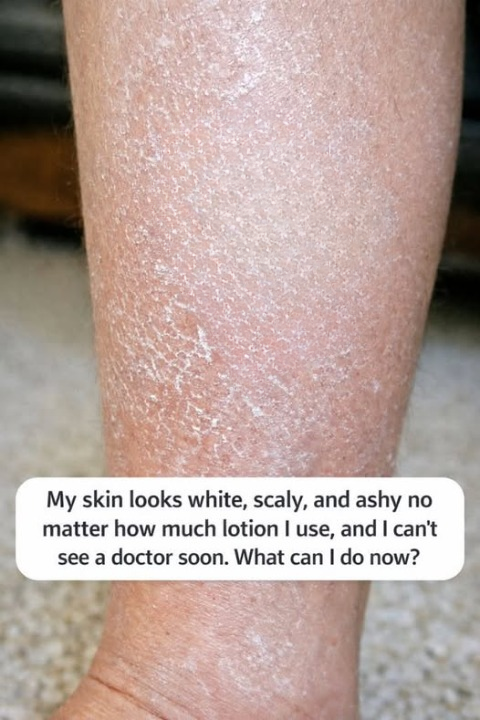
Dry, rough, or flaky skin can be frustrating—especially when it seems like no amount of lotion provides lasting relief.
Many people experience periods where their skin appears dull, ashy, tight, or visibly dry despite applying moisturizers regularly. While it’s always a good idea to consult a healthcare professional if symptoms persist or worsen, sometimes appointments aren’t immediately available. In the meantime, there are several practical steps you can take to help support your skin’s moisture barrier and improve comfort.
It’s important to remember that dry skin can have many possible causes. Environmental conditions, seasonal changes, bathing habits, skincare products, hydration levels, age, and individual skin characteristics can all play a role.
This article provides general skincare information and self-care strategies that may help while you wait to speak with a healthcare provider.
Understanding Why Skin Can Appear Ashy or Flaky
The outermost layer of your skin serves as a protective barrier.
When that barrier loses moisture or becomes irritated, the skin may appear:
- Dry
- Rough
- Tight
- Flaky
- Scaly
- Dull
- Ashy
The appearance of “ashy” skin often occurs when dead skin cells accumulate on the surface and the skin lacks sufficient moisture.
Cold weather, indoor heating, low humidity, and frequent washing can make these symptoms more noticeable.
Fortunately, supporting your skin barrier often starts with a few simple adjustments.
Step 1: Choose a Thicker Moisturizer
Not all moisturizers work the same way.
Many lightweight lotions feel pleasant when applied but may not provide enough hydration for very dry skin.
If your current lotion isn’t helping, consider switching to a thicker cream or ointment.
Products marketed as creams or balms often contain ingredients that help seal moisture into the skin.
Look for products that contain ingredients such as:
- Glycerin
- Ceramides
- Hyaluronic acid
- Petrolatum
- Shea butter
- Colloidal oatmeal
These ingredients are commonly used to support skin hydration.
A thicker product may feel heavier at first, but many people find it more effective for persistent dryness.
Step 2: Apply Moisturizer Immediately After Bathing
Timing matters.
One of the most effective ways to improve skin hydration is to apply moisturizer shortly after bathing or washing.
After gently patting your skin dry:
- Leave the skin slightly damp.
- Apply moisturizer within a few minutes.
- Cover all dry areas thoroughly.
This approach helps lock moisture into the skin before it evaporates.
Many people notice better results simply by changing when they apply moisturizer.
Step 3: Avoid Very Hot Showers
Hot water can feel relaxing, especially during colder months.
However, extremely hot showers may remove natural oils from the skin.
These oils help protect the skin barrier and retain moisture.
Instead, try:
- Warm rather than hot water
- Shorter showers
- Gentle cleansing products
Reducing water temperature can help minimize moisture loss and support healthier-looking skin.
Step 4: Use Gentle, Fragrance-Free Cleansers
Some soaps and body washes can leave the skin feeling tight or stripped.
If your skin feels noticeably dry after cleansing, your products may be contributing to the problem.
Consider switching to a gentle cleanser labeled for sensitive or dry skin.
Products without heavy fragrances or harsh detergents may be less likely to irritate already-dry skin.
After cleansing, your skin should feel clean—not squeaky, tight, or uncomfortable.
Step 5: Consider Using a Humidifier
Indoor air can become surprisingly dry, particularly during colder seasons.
Heating systems often reduce humidity levels inside homes.
When humidity drops, moisture may evaporate from the skin more quickly.
A humidifier can help add moisture back into the air.
Many people find that maintaining comfortable indoor humidity improves both skin comfort and overall dryness.
Even running a humidifier overnight in the bedroom may make a noticeable difference.
Step 6: Stay Hydrated Throughout the Day
Hydration supports overall health and may contribute to healthy skin function.
While drinking more water isn’t a guaranteed solution for dry skin, maintaining adequate hydration is still important.
Consider:
- Drinking water consistently throughout the day
- Including water-rich foods in your diet
- Monitoring hydration during hot weather or physical activity
Healthy hydration habits support many bodily functions, including those related to skin health.
Step 7: Protect Your Skin from Harsh Weather
Environmental conditions can significantly affect skin appearance.
Cold wind, low humidity, and extreme temperatures often increase dryness.
If you spend time outdoors:
- Wear protective clothing
- Use gloves in cold weather
- Cover exposed skin when appropriate
- Apply moisturizer before outdoor activities
Simple protective measures can help reduce environmental stress on the skin.
Step 8: Avoid Excessive Scrubbing
When skin looks flaky or rough, it can be tempting to scrub aggressively.
Unfortunately, excessive scrubbing may worsen irritation and dryness.
Instead:
- Use soft washcloths
- Avoid harsh exfoliation
- Be gentle when drying your skin
- Focus on hydration rather than aggressive removal
Supporting the skin barrier is often more beneficial than trying to remove every visible flake.
Step 9: Pay Attention to Your Laundry Products
Sometimes skin irritation isn’t caused by skincare products at all.
Laundry detergents, fabric softeners, and scented products can occasionally contribute to skin discomfort.
If your skin seems unusually sensitive, consider:
- Fragrance-free detergents
- Hypoallergenic products
- Thorough rinsing cycles
Small changes in household products may help reduce irritation for some individuals.
Step 10: Consider Your Daily Routine
Certain habits can contribute to persistent dryness.
Examples include:
- Frequent hand washing
- Repeated exposure to cleaning products
- Long hot baths
- Excessive use of alcohol-based products
- Spending time in very dry environments
Identifying and adjusting these factors may help improve skin comfort over time.
Common Mistakes People Make
Many individuals unintentionally make dry skin worse by:
Applying Too Little Moisturizer
A small amount may not be enough for very dry skin.
Using Moisturizer Only Once Daily
Some people benefit from applying moisturizer multiple times per day.
Waiting Until Skin Feels Dry
Regular moisturizing often works better than waiting until symptoms appear.
Frequently Switching Products
Constantly changing skincare products can make it difficult to determine what works best.
Consistency is often helpful when building a skincare routine.
When Professional Care Becomes More Important
While mild dryness is common, certain symptoms deserve medical attention when available.
Consider contacting a healthcare professional if you experience:
- Severe itching
- Painful cracking
- Bleeding skin
- Widespread rash
- Signs of infection
- Rapid worsening
- Symptoms interfering with daily activities
A healthcare provider can evaluate your specific situation and determine whether additional treatment or testing is appropriate.
Supporting Skin Health Over Time
Healthy skin habits are usually built through consistency rather than quick fixes.
Many people see improvement when they focus on:
- Gentle cleansing
- Regular moisturizing
- Environmental protection
- Adequate hydration
- Consistent routines
Results may take time, especially if the skin barrier has been compromised for an extended period.
Patience and consistency often produce the best outcomes.
Final Thoughts
If your skin looks dry, flaky, rough, or ashy despite using lotion, you’re certainly not alone.
Many factors can influence skin moisture, and sometimes small adjustments make a meaningful difference.
Choosing a richer moisturizer, applying it immediately after bathing, avoiding very hot water, protecting your skin from harsh conditions, and maintaining a gentle skincare routine may help improve comfort while you wait to speak with a healthcare professional.
Most importantly, remember that healthy skin is often the result of regular care and patience rather than a single product or quick solution.
By focusing on hydration, protection, and consistency, you can help support your skin’s natural barrier and improve its appearance over time while preparing for a professional evaluation if needed.