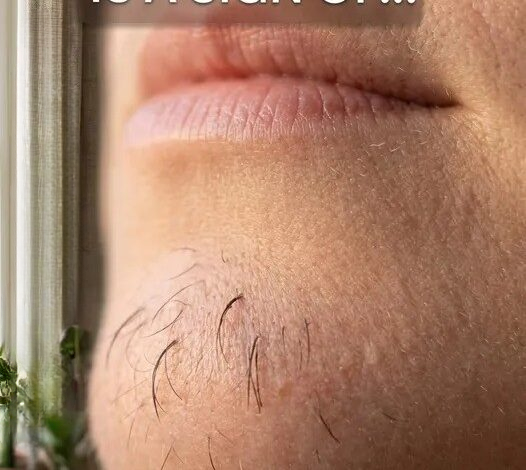
Introduction: Small Changes Can Sometimes Reveal Bigger Health Clues
Many people have had the experience of looking in the mirror one morning and noticing a single coarse hair on the chin that seemed to appear out of nowhere. While it may feel surprising or even frustrating, this type of change is more common than many realize. In most cases, an occasional chin hair is a normal part of life and not a reason for concern. However, changes in hair growth patterns can sometimes provide useful information about the body’s hormonal activity and overall health.
Modern society often places significant emphasis on appearance, leading many women to view facial hair growth purely as a cosmetic issue. As a result, the immediate response is often to remove the hair and move on without giving it much thought. While there is nothing wrong with managing unwanted hair for personal comfort, it can also be valuable to understand why these changes occur in the first place.
The human body constantly sends signals about its internal processes. Skin, nails, hair, energy levels, sleep quality, and even appetite can reflect what is happening beneath the surface. Facial hair growth is one of many physical changes that can be influenced by age, genetics, hormones, medications, and lifestyle factors.
Understanding the possible reasons behind unexpected chin hair growth can help individuals make informed decisions about their health while avoiding unnecessary anxiety. Rather than assuming the worst, it is helpful to view these changes as opportunities to learn more about the body’s natural functions.
This article explores the common causes of chin hair growth in women, the role of hormones, when medical evaluation may be beneficial, and practical steps for maintaining overall hormonal health.
The Biology of Hair Growth
To understand why chin hair may appear, it helps to first understand how hair grows.
The human body contains millions of hair follicles. These tiny structures are responsible for producing hair throughout the body. Hair growth occurs in cycles that include:
1. Growth Phase (Anagen)
This is the active stage during which hair grows from the follicle.
2. Transition Phase (Catagen)
Hair growth slows and the follicle begins preparing for rest.
3. Resting Phase (Telogen)
Hair eventually sheds, making room for new growth.
Different areas of the body respond differently to hormonal signals. Hair on the scalp behaves differently from hair on the face, arms, legs, or underarms.
Facial hair follicles are particularly sensitive to hormones known as androgens. These hormones are often associated with male characteristics but are naturally present in both men and women.
When androgen levels increase—or when hair follicles become more sensitive to them—facial hair may become thicker, darker, or more noticeable.
Why Women Naturally Have Facial Hair
A common misconception is that women should not have facial hair. In reality, nearly all women have facial hair to some degree.
Most facial hair appears as fine, light-colored strands called vellus hair. These hairs are often difficult to notice.
However, certain factors may cause some of these fine hairs to transform into thicker terminal hairs. Terminal hairs are darker, coarser, and more visible.
The appearance of a few terminal hairs on the chin is not unusual and often occurs naturally with age.
The Role of Hormones
Hormones act as chemical messengers throughout the body. They regulate numerous processes, including:
- Growth
- Reproduction
- Metabolism
- Mood
- Sleep
- Hair growth
Even small shifts in hormone levels can influence hair follicles.
Among the most important hormones affecting facial hair growth are:
Testosterone
Although commonly associated with men, women also produce testosterone in small amounts.
Testosterone helps support:
- Muscle health
- Bone strength
- Energy levels
- Sexual health
However, increased levels may contribute to facial hair growth.
Androgens
Androgens represent a group of hormones that influence hair growth patterns.
When androgen activity increases, facial hair may become more prominent.
Estrogen
Estrogen helps balance many bodily functions and can affect how hair follicles respond to other hormones.
Changes in estrogen levels during different life stages may contribute to changes in facial hair.
Age-Related Changes and Facial Hair Growth
One of the most common reasons women notice chin hair is simply aging.
As women grow older, natural hormonal changes occur. These shifts can affect hair growth patterns throughout the body.
For example:
- Scalp hair may become thinner.
- Eyebrows may change.
- Facial hair may become more noticeable.
This process often becomes more apparent during midlife.
The body gradually produces different amounts of hormones compared to earlier decades, leading to visible changes that many women experience.
These changes are typically a normal part of aging rather than signs of illness.
Menopause and Hormonal Transition
Menopause represents a significant hormonal milestone.
During this phase, estrogen production declines naturally. As estrogen decreases, the relative influence of androgens may become more noticeable.
This shift can contribute to:
- Chin hair growth
- Upper lip hair
- Changes in skin texture
- Altered hair thickness
Many women first notice facial hair during the years leading up to or following menopause.
Because menopause affects each individual differently, the degree of change varies considerably from person to person.
Genetics: An Often Overlooked Factor
Genetics play a major role in determining hair growth patterns.
If close female relatives have experienced noticeable facial hair growth, there is a greater chance that similar changes may occur.
Inherited traits influence:
- Hair density
- Hair color
- Follicle sensitivity
- Hormonal responsiveness
In many cases, genetics explains facial hair growth more than any underlying medical issue.
Understanding family history can provide helpful context when evaluating changes in appearance.
Polycystic Ovary Syndrome (PCOS)
One of the more commonly discussed hormonal conditions associated with facial hair growth is Polycystic Ovary Syndrome, often abbreviated as PCOS.
PCOS affects hormone regulation and may influence:
- Menstrual cycles
- Fertility
- Weight management
- Skin health
- Hair growth
Common signs may include:
- Increased facial hair
- Acne
- Irregular periods
- Thinning scalp hair
- Weight fluctuations
It is important to note that experiencing one symptom does not automatically indicate PCOS.
Only qualified healthcare professionals can properly evaluate and diagnose hormonal conditions.
Other Medical Factors That May Influence Hair Growth
Several health-related factors can affect hair growth patterns.
Thyroid Conditions
The thyroid gland helps regulate metabolism and numerous bodily functions.
Changes in thyroid activity can sometimes influence:
- Hair texture
- Hair density
- Skin condition
- Energy levels
Adrenal Gland Activity
The adrenal glands produce hormones involved in stress responses and other important functions.
Hormonal shifts involving these glands may affect hair growth.
Metabolic Health
Overall metabolic wellness influences hormone balance and can indirectly impact hair patterns.
Maintaining healthy lifestyle habits often supports better hormonal regulation.
Medications and Facial Hair Growth
Certain medications may contribute to changes in hair growth.
Examples can include treatments that affect hormone levels or specific biological pathways involved in hair production.
If facial hair appears after starting a new medication, discussing concerns with a healthcare provider may be worthwhile.
Never stop prescribed medications without professional guidance.
Stress and Its Impact on the Body
Stress affects nearly every system in the body.
Long-term stress can influence:
- Sleep
- Appetite
- Energy
- Hormonal balance
Although stress alone is not usually the direct cause of chin hair growth, it may contribute to hormonal fluctuations that affect hair follicles.
Stress management can therefore support overall wellness.
Helpful strategies include:
- Regular exercise
- Relaxation techniques
- Quality sleep
- Social support
- Mindfulness practices
The Connection Between Weight and Hormones
Body weight can influence hormone regulation.
Excess body fat may affect how certain hormones are produced and processed.
Maintaining a balanced lifestyle that includes nutritious foods and physical activity can help support healthy hormone function.
The goal should always be overall wellness rather than focusing exclusively on appearance.
Common Myths About Chin Hair
Myth 1: Plucking Makes Hair Grow Back Thicker
This is one of the most widespread misconceptions.
Plucking does not change the structure of the hair follicle.
The hair may appear thicker because the new growth has a blunt edge, but the follicle itself remains unchanged.
Myth 2: One Chin Hair Means Something Is Wrong
A single chin hair is usually not a sign of disease.
Many women experience occasional facial hair growth throughout life.
Myth 3: Facial Hair Only Affects Older Women
Facial hair can appear at various ages depending on genetics, hormones, and individual biology.
Myth 4: Facial Hair Is Rare
In reality, facial hair growth is extremely common among women.
Many simply choose not to discuss it openly.
When Should You Consider Medical Advice?
Most cases of occasional chin hair are harmless.
However, it may be worth discussing changes with a healthcare professional if facial hair growth is:
- Rapidly increasing
- Accompanied by irregular menstrual cycles
- Associated with significant acne
- Accompanied by scalp hair thinning
- Occurring alongside other noticeable hormonal changes
A medical evaluation can help determine whether further investigation is needed.
Diagnostic Approaches
Healthcare providers may evaluate several factors.
These can include:
Medical History
Understanding symptoms, family history, and lifestyle habits.
Physical Examination
Assessing overall health and hormonal indicators.
Laboratory Testing
Blood tests may help evaluate hormone levels.
Additional Assessments
Further testing may be recommended depending on individual circumstances.
The goal is not simply to address facial hair but to understand overall health.
Hair Removal Options
Many people choose to manage unwanted facial hair through cosmetic methods.
Common options include:
Tweezing
Suitable for occasional hairs.
Waxing
Removes multiple hairs at once.
Threading
A popular technique for facial hair management.
Shaving
Contrary to common myths, shaving does not cause hair to grow back thicker.
Laser Hair Reduction
Can provide longer-term results for some individuals.
Electrolysis
Targets individual follicles and may provide lasting reduction.
Choosing a method depends on personal preferences, skin sensitivity, and budget.
Nutrition and Hormonal Wellness
Healthy nutrition supports overall hormone balance.
Key areas include:
Protein
Supports tissue repair and overall health.
Healthy Fats
Important for hormone production.
Fiber
Supports digestive and metabolic health.
Fruits and Vegetables
Provide essential nutrients and antioxidants.
Hydration
Supports nearly every bodily process.
A balanced eating pattern benefits overall well-being and may indirectly support hormonal stability.
Physical Activity and Hormonal Health
Regular movement offers numerous benefits.
Exercise can support:
- Metabolic health
- Stress management
- Energy levels
- Sleep quality
- Hormonal balance
Activities do not need to be intense to be effective.
Walking, swimming, cycling, yoga, and strength training can all contribute positively.
Sleep and Hormone Regulation
Sleep plays a critical role in hormonal function.
Poor sleep can influence:
- Appetite hormones
- Stress hormones
- Energy regulation
Creating healthy sleep habits may support overall wellness.
Helpful practices include:
- Consistent bedtimes
- Limiting screens before bed
- Maintaining a comfortable sleep environment
- Avoiding excessive caffeine late in the day
Body Awareness Without Fear
One of the most important lessons in health is learning how to pay attention to the body without becoming alarmed by every change.
The body naturally evolves throughout life.
Hair patterns change.
Skin changes.
Energy levels change.
These shifts do not automatically indicate illness.
At the same time, remaining attentive allows individuals to recognize patterns that may warrant professional guidance.
Balance is key.
Breaking the Stigma Around Women’s Facial Hair
Open conversations about women’s health can reduce unnecessary embarrassment and misunderstanding.
Facial hair growth affects countless women worldwide.
Yet many feel uncomfortable discussing it due to unrealistic beauty standards.
Recognizing that facial hair is a common biological experience can help normalize conversations and encourage informed decision-making.
Health should always take priority over unrealistic expectations.
The Bigger Picture
A single chin hair rarely tells the whole story.
Instead, it represents one small piece of a much larger picture involving genetics, hormones, age, lifestyle, and overall health.
Most of the time, occasional facial hair growth is a completely normal experience. Nevertheless, paying attention to changes in the body can provide valuable insights into personal well-being.
Rather than viewing these changes solely through a cosmetic lens, it can be helpful to approach them with curiosity and understanding.
The human body is remarkably complex. Every stage of life brings new experiences and adjustments. Learning to recognize these changes—and understanding when they are normal versus when they may deserve professional attention—empowers individuals to take an active role in their health.
Final Thoughts
Finding an unexpected chin hair can certainly be surprising, but it is usually far less dramatic than many headlines suggest. In most cases, it reflects normal biological processes related to age, genetics, and natural hormonal fluctuations.
At the same time, persistent or rapidly changing hair growth patterns may serve as useful prompts to pay closer attention to overall health and discuss concerns with a healthcare professional if needed.
The key takeaway is simple: listen to your body without fear. Small changes can offer valuable information, but they should be viewed within the broader context of your overall health. By staying informed, maintaining healthy lifestyle habits, and seeking professional guidance when appropriate, you can better understand what your body is telling you and make confident decisions about your well-being.